

If you use an air fryer often, you probably want two things. You want reliable results. And you want a setup that feels safe and simple for everyday meals.
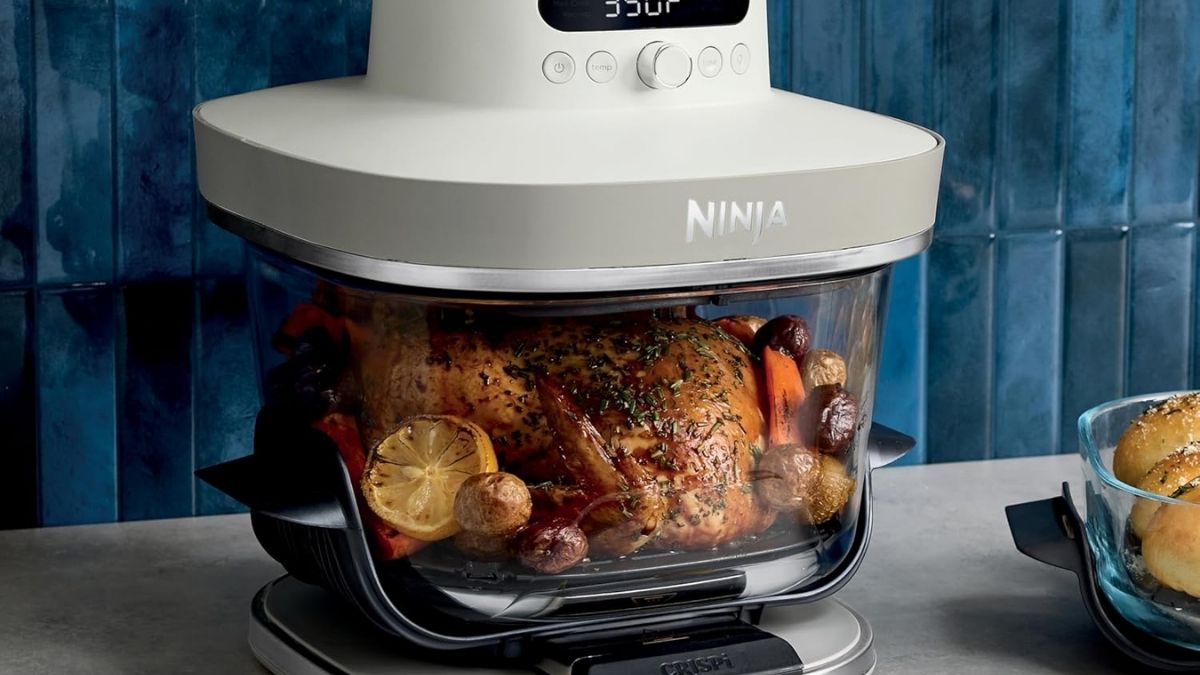
The Ninja Crispi Pro 6-in-1 Glass Air Fryer leans into both, using a transparent glass cooking system and a modular base designed to reduce guesswork and reduce extra dishes.
Still, it’s not a perfect fit for every kitchen. The best way to judge it is to look at what it does well, where it competes with traditional basket-style air fryers, and what limitations you should expect.
What Makes It Different From Most Air Fryers
Most air fryers rely on an opaque basket. That means you can’t see browning or bubbling without opening the unit. With the Crispi Pro, you can monitor your food through the glass container, which can help you avoid overcooking and reduce heat loss from frequent checks.
The bigger difference is the cooking vessel itself. Instead of a plastic-lined drawer or coated basket, your food cooks inside Ninja’s CleanCrisp™ thermal shock–resistant glassware. If you’re trying to reduce plastic contact during heating, that design choice is the main draw.
You also get a modular base that works with multiple container sizes:
- 6-quart container for family meals
- 2.5-quart container for sides and smaller portions
- Optional 4-quart size (sold separately) for a mid-size option
Six Cooking Functions and How You’ll Actually Use Them
This unit combines several appliances into one. That can be a win if your counter space is limited, but only if you’ll use the modes.
Here’s what the six functions are best for:
- Max Crisp: fast browning and crunch for fries, wings, frozen snacks
- Air Fry: everyday crisping with less oil than deep frying
- Bake/Proof: cookies, quick bakes, and controlled warmth for dough
- Roast: vegetables and proteins that benefit from even heat
- Recrisp: leftovers that you want crisp again, not soft
- Dehydrate: fruit, herbs, and jerky-style drying at lower temps
A realistic perspective: if you only ever air fry frozen foods, you may not fully use the bake/proof or dehydrate modes. But if you meal prep, reheat often, or like multipurpose appliances, the extra modes can reduce clutter.
Quick Specs and Practical Footprint
You’re working with an 1800W appliance that can reach 450°F (232°C). That supports fast preheating and strong convection-style cooking.
It isn’t tiny, though. The footprint is roughly 11.8″ D × 12.2″ W × 11″ H, and it weighs about 11.4 lbs. If you have limited counter space or low cabinets, that size may matter more than the feature list.
Glass vs. Basket Air Fryers: A Clear Comparison
Here’s a simple view of what you gain and what you trade off.
| Feature | Ninja Crispi Pro (Glass System) | Typical Basket Air Fryer |
| Visibility while cooking | Yes, you can watch through glass | No, usually opaque |
| Food contact surface | Glass container + crisper plate | Coated metal basket, sometimes plastic parts |
| Workflow | Cook → serve → store in same container | Often transfer to serving/storage |
| Cleanup | Glass is dishwasher-safe | Basket may be dishwasher-safe but can trap grease |
| Footprint | Moderate, modular setup | Varies, often more compact |
| Crisping style | Strong, but depends on spacing and plate | Often very strong with open basket airflow |
Benefits You’ll Notice in Daily Cooking
If you value control and fewer transfers, the design works in your favor.
You’ll likely notice:
- Less interruption: you can check progress without opening the unit
- Fewer dishes: cook, serve, store, and reheat in the same container
- Better meal prep flow: lids make leftovers easier to handle
- More flexible batch sizes: small sides and full meals in different containers
This approach also suits households that want an air fryer to feel more like a “cookware system” than a single-purpose gadget.
Limitations and Objections You Should Consider
If you’re deciding between this and a standard basket air fryer, these are the realistic concerns.
1) “Will glass crisp as well as a basket?”
You can get crisp results, but spacing matters more. Overcrowding reduces airflow. Using the crisper plate correctly becomes essential.
2) “Is it too bulky for my kitchen?”
If you store appliances between uses, the footprint and weight may feel inconvenient. If you keep it out full-time, it’s easier to justify.
3) “Glass sounds fragile.”
Thermal shock–resistant glass is designed for temperature swings, but you still need basic care. A hard drop is still a hard drop.
4) “Do I need six modes?”
If you only air fry occasionally, a simpler unit may be better value. This model makes more sense when you cook frequently and want the storage/serving system too.
What You Get in the Box
You’re not just buying a base unit. You’re buying a set.
Typically included:
- Modular cooking base
- 6-quart glass container
- 2.5-quart glass container
- Two fitted crisper plates
- Two snap-lock lids
- Recipe guide
The Bottom Line: Who This Makes Sense For
If you want a visible cooking process, fewer transfers, and a glass-based system that supports daily meals and leftovers, this design is built for you. You’re essentially choosing a workflow upgrade, not just an air fryer.
If you prioritize compact size, the absolute fastest crisping from a wide open basket, or the lowest upfront cost, a traditional basket-style air fryer may suit you better.
The Crispi Pro is strongest when you’ll use the containers as part of how you cook, store, and reheat—not just as a place to crisp food.