

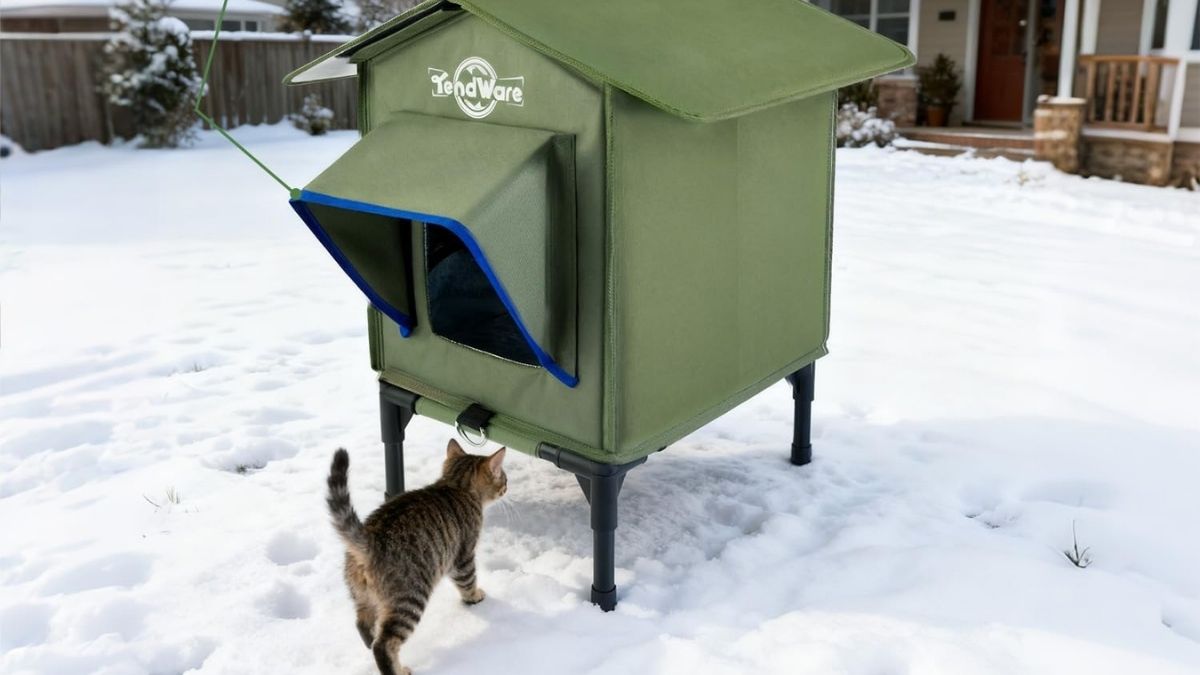
Outdoor cats deal with more than low temperatures. They also face wet ground, wind-driven rain, and predators that can make a basic shelter feel unsafe. If you support community cats or have an outdoor pet, you want a setup that stays dry, holds warmth, and gives cats a way to retreat without feeling trapped.
The TENDWARE Outdoor Cat House aims to cover those basics in one design. It uses a weather-resistant fabric shell, layered insulation, and a heated interior. It also adds a dual-exit layout, which can matter a lot for skittish cats.
That said, “heated and weatherproof” can mean different things depending on your climate and placement. The best results usually come from pairing the shelter’s design with smart positioning and simple upkeep.
Quick Specs at a Glance
This overview helps you compare it to other outdoor shelters without digging through a long listing.
| Spec | What You Get |
| Size | 21.5″ × 17″ × 22.5″ |
| Exterior material | 900D Oxford cloth |
| Insulation | Pearl cotton + aluminum film |
| Heating | Heated interior support |
| Entry design | Dual exits with magnetic flaps |
| Roof | Triangular, water-shedding shape |
| Base | Elevated platform |
| Maintenance | Flip-open roof access |
| Assembly | Tool-free setup |
How the Design Handles Weather in Real Use
A shelter can look good on paper and still underperform outdoors. Here’s how the main weather features translate into day-to-day protection.
Weatherproof outer shell and sealed build
The 900D Oxford cloth exterior is built to resist moisture and wear. In practical terms, that helps when the shelter sits near bushes, fences, or other spots where abrasion is common.
Still, fabric shelters have limits. If your area gets long stretches of heavy rain, placement matters as much as material. A covered porch or carport location can reduce direct soak and extend lifespan.
Insulation that supports heat retention
The multi-layer insulation is designed to reduce heat loss and reflect warmth inward. This can help in two ways:
- It helps the heater maintain a stable interior climate.
- It helps cats retain warmth even when the heater cycles or is not running at full strength.
If you’re in a milder climate, insulation may do most of the work on its own. In harsher climates, the heater and insulation combination becomes the key benefit.
Roof shape that sheds water and snow
The triangular roof is a functional choice. It encourages runoff and reduces pooling, which can weaken materials over time. It also helps keep the entry area clearer during storms.
Safety Features and Why Some Cats Refuse Certain Shelters
Outdoor cats can be picky, especially feral or semi-feral cats. The TENDWARE design leans into features that make entry feel safer.
Dual exits reduce “trap” anxiety
Two exits can increase shelter use. If a cat feels cornered, it may avoid the space entirely. Dual doors give a clear escape route, which can be reassuring in areas with dogs, raccoons, or other threats.
Magnetic flaps balance warmth and access
The door flaps help block drafts and keep heat in. They also discourage casual predator entry.
A potential limitation is acclimation. Some cats need time to accept a flap. If you notice hesitation, leaving one flap open briefly during introduction can help.
Small windows support awareness
Peep windows allow cats to check surroundings without leaving cover. This can make the interior feel less like a blind spot.
Heating Comfort: Benefits and Tradeoffs
Heated shelters can be a major upgrade, but they come with practical considerations. Different caretakers will view this differently.
The case for heated shelters
If you’re focused on winter survival, heat can be a meaningful safety feature. It reduces hypothermia risk and encourages cats to stay inside longer rather than roaming for warmth.
The case for non-heated shelters
Some caretakers prefer non-heated shelters for simplicity. They may avoid cords, power use, or concerns about moisture around electrical connections.
If you fall into that camp, this shelter can still work because insulation and bedding can provide warmth. You just may not use the heating feature every season.
Real-world limitation to plan for
Power access is the main constraint. If your placement spot can’t safely support a cord route, you may need a different setup or a sheltered location that protects the connection.
Setup, Placement, and Maintenance Tips
Performance depends on how you use it. These steps can improve results without adding complexity.
- Place it out of direct wind, ideally against a wall or fence.
- Keep it off low spots where water pools.
- Add straw or thermal bedding for extra insulation.
- Check and replace bedding regularly to prevent dampness.
- Use the flip-open roof to clean quickly without disassembly.
Who This Shelter Is Best For
You’ll get the most value if you’re in one of these situations:
- You support community cats and need a ready-to-use winter shelter.
- You want a safer-feeling shelter for cautious cats that avoid enclosed boxes.
- You need something portable that’s easier to move than wood structures.
If you need a shelter that can handle years of extreme weather with minimal wear, a heavy-duty wooden shelter may last longer. The TENDWARE option trades that “permanent build” durability for easier setup, lighter weight, and heated comfort.
A Practical Shelter With Clear Strengths
The TENDWARE Outdoor Cat House is built around real outdoor needs: warmth retention, moisture resistance, and escape-focused safety. The dual exits and insulated build can make it more usable for wary cats, while the heated interior adds meaningful support in cold conditions.
The main objections come down to fabric durability and power logistics. If you can place it in a protected spot and keep bedding dry, those limitations become easier to manage.
This item is part of Amazon Today’s Deals in the Pet Supplies category. You can explore more products in this category to compare heated shelters, insulated cat houses, and outdoor care essentials for community cats and outdoor pets.