

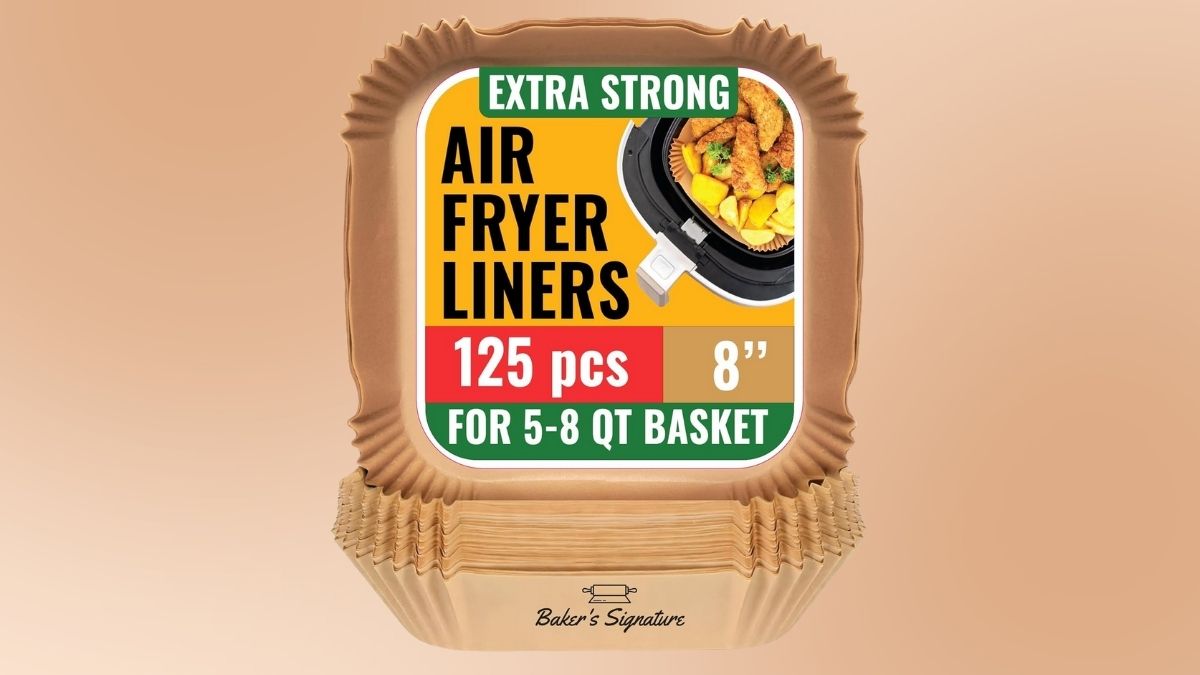
Air fryers are built for speed and crunch. The trade-off is often the basket cleanup, especially after greasy proteins, sticky marinades, or cheese-heavy snacks. Paper liners aim to solve that problem by catching drips and crumbs before they bake onto the basket.
Still, liners raise fair questions. Will they block airflow and soften food? Are they safe at high heat? Do they fit well enough to avoid burning near the heating element? This guide breaks down how air fryer paper liners work, where they help most, and where they can hold you back.
What air fryer paper liners are (and what they aren’t)
Air fryer paper liners are pre-cut parchment sheets made to sit inside basket-style air fryers. Many are sized for popular basket capacities and shaped to reduce shifting during cooking.
They are not the same as wax paper. Wax paper can smoke or melt in high heat. Parchment paper is designed for baking temperatures and is the correct material for air-fryer liners.
Baker’s Signature liners are 8×8-inch squares designed for 5–8 quart basket air fryers. The goal is simple: create a disposable barrier that reduces residue while keeping the basket’s nonstick coating from taking a daily beating.
Why people use liners (and why some skip them)
Liners are a convenience upgrade, but not everyone needs them for every meal. It helps to look at both sides.
The case for liners
- Faster cleanup, especially for greasy or saucy foods
- Less scrubbing, which can extend the life of nonstick coatings
- Easier food release for delicate items like fish or breaded cutlets
- Less chance of small bits falling through the basket holes
The case against liners
- Poor placement can reduce airflow and affect crispness
- Using liners during preheat can be a safety risk if the paper lifts
- Some foods crisp better with direct basket contact
- Ongoing cost and added waste compared to washing the basket
If you use an air fryer a few times a week and hate cleanup, liners can feel essential. If you mainly cook dry foods (like reheating fries), you might only reach for them occasionally.
How Baker’s Signature liners are designed to help
Fit matters more than people expect. A liner that bunches up can block circulation. A liner that’s too large can creep up the sides and get too close to the heating element. An 8×8 liner is meant to sit flat in many mid-to-large baskets without excess overhang.
The oil-resistant parchment also helps with foods that “paint” the basket with residue. Think bacon, skin-on chicken, marinated skewers, or wings with sugar-based sauces. The liner catches the mess before it bonds to the coating.
Heat tolerance is another practical point. Most air frying sits in a familiar range (often around 350–400°F). Quality parchment is designed to handle typical cooking temperatures without adding off-flavors or breaking down mid-cycle.
The biggest limitation: airflow and crispness
Air fryers work because hot air can circulate around food. A liner changes the surface under the food, so results depend on how you use it.
To keep crispness strong, you want:
- The liner to sit flat on the basket bottom
- Food spread out, not piled in the center
- Enough weight on the liner so it can’t lift or flutter
Foods that stay crisp with liners tend to be heavier or have rendered fat. Foods that can soften include lightweight breaded items if they’re crowded, because steam gets trapped under the crust.
Safety and best-use rules you should follow
This is the part that matters most. Liners are safe when used correctly, and risky when used casually.
- Do not preheat with an empty liner in the basket
- Keep paper edges from riding up the sides
- Always place food on top before starting the cook
- Swap liners between batches when the surface gets saturated
If you want to preheat, do it without the liner. Add the liner only when the food goes in.
Quick decision table: when liners are worth it
| Food type | Liner recommendation | Why it helps (or not) |
| Bacon, sausages, fatty meats | Strong yes | Catches grease and reduces baked-on residue |
| Sticky sauces (teriyaki, honey, BBQ) | Strong yes | Prevents sugar-based glaze from bonding to basket |
| Delicate fish or flaky pastries | Yes | Improves release and reduces breakage |
| Fries, nuggets, dry reheats | Maybe | Cleanup is already easy; crispness may be slightly better without |
| Very light foods (chips, thin scraps) | Caution | Paper can lift if not weighted well |
Practical ways liners can make weekly cooking easier
Liners are useful beyond basic cleanup. They can support batch cooking by keeping each round tidy, especially when you cook multiple components back-to-back.
They also help with “messy convenience” foods that usually make people avoid the air fryer. Once cleanup is easier, you’re more likely to use the appliance for wings, glazed vegetables, or cheese melts without dreading the basket afterward.
A cleaner routine without overthinking it
Air fryer paper liners can be a smart tool when you match them to the right foods and use them safely. Baker’s Signature 8×8 liners make the most sense if you cook greasy, sticky, or delicate items often, and you want faster cleanup without constant scrubbing.
They are not a must-have for every cook cycle. If maximum crispness is your top goal, you may prefer direct basket cooking for certain foods. But when cleanup time is the bigger problem, liners can make air frying feel easier and more consistent.
This item is part of Amazon New Best Sellers in the Kitchen & Dining – Air Fryer Accessories category, and you can explore more products within that category to find other small add-ons that simplify everyday air frying.