

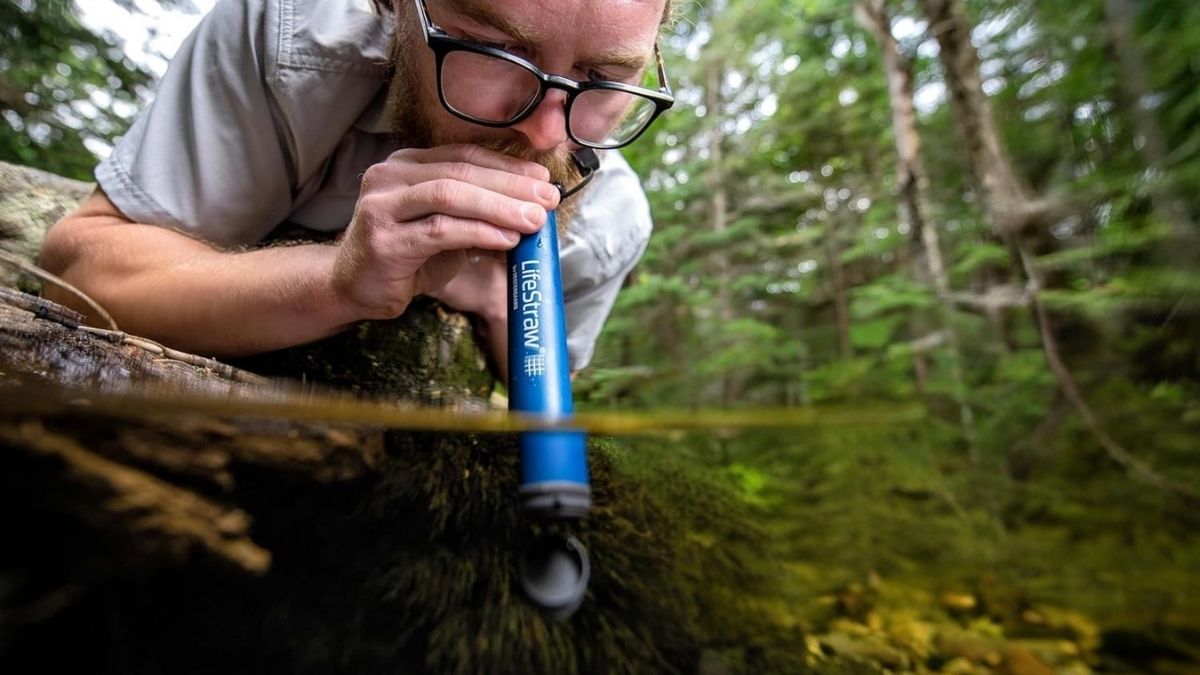
When you’re far from the comforts of clean tap water, hydration suddenly feels like the most important thing in the world.
I learned this lesson the hard way during a multi-day hike when my water bottle ran dry before I reached the next campsite. That’s when the LifeStraw Personal Water Filter proved its worth. Small, lightweight, and simple to use, this slim blue tube has completely changed the way I—and many other adventurers—approach water safety in the wild.
Its presence alone gave me the confidence to push further on the trail, knowing I could drink safely from almost any stream I passed. It also eliminated the stress of carrying extra bottles of water, freeing up space in my pack for other essentials. Best of all, it turned what could have been a risky situation into a story of reassurance and preparedness. What makes this little filter such a big deal? Let’s dig deeper.
How the LifeStraw Works: Simple Science, Big Results
At first glance, the LifeStraw looks almost too simple to take seriously. But inside is some clever science at work. The filter uses hollow fiber membrane technology with pores as tiny as 0.2 microns. This means that when you sip water through it, bacteria and protozoa—like E. coli, Giardia, and Cryptosporidium—get trapped, while clean water passes through.
The result is instant access to safe drinking water without relying on chemicals or waiting for tablets to dissolve. Unlike UV purifiers that need batteries or pumps that add weight, the LifeStraw is purely mechanical. It works every time you use it, no charging or setup required.
Compact and Lightweight: Built for the Trail
One of the most appealing things about the LifeStraw is its size. Weighing only about 2 ounces and just 9 inches long, it disappears into your pack until you need it. Yet, despite its small footprint, it has a surprisingly large capacity—filtering up to 4,000 liters (about 1,000 gallons) of water.
That’s more than enough to last a solo backpacker through several long trips or serve as a long-term solution for emergency preparedness. And since it’s made from BPA-free plastic, it’s safe and durable enough to withstand tough conditions.
Trail-Tested Performance: Why Hikers Rely on It
On trails, the LifeStraw quickly proves its worth. Whether it’s a clear mountain stream or a muddy puddle after rain, it makes water drinkable within seconds. There’s a brief learning curve—the first few sips might feel harder as the filter primes itself—but once it’s going, the flow becomes smooth.
Many thru-hikers report that they appreciate not having to carry liters of extra water, since streams, rivers, and ponds become reliable hydration sources. As one backpacker put it: “Carrying the LifeStraw feels like carrying a safety net. Wherever I go, I know I’ll never run dry.”
Beyond the Trail: Camping, Travel, and Emergencies
The LifeStraw isn’t just for hiking. Campers use it as a backup alongside larger water filters, while international travelers often bring it along for peace of mind in countries where tap water isn’t trustworthy. TSA allows it in carry-on luggage, which makes it easy to pack for overseas trips.
It’s also a smart addition to any emergency kit. Floods, storms, or infrastructure breakdowns can compromise municipal water systems. In those cases, having a LifeStraw on hand can make the difference between drinking safely and getting sick. FEMA even recommends filtration systems like this as part of household emergency preparedness.
Know the Limits: What It Can’t Do
As powerful as the LifeStraw is, it’s not a magic wand. It doesn’t filter out viruses, heavy metals, or chemicals—so it’s not ideal for water sources near industrial zones or polluted areas. Extremely silty water can also clog it quickly unless you let particles settle first or pre-filter through a cloth.
In short, it’s a fantastic solution for natural sources like lakes, streams, and rivers, but it shouldn’t be your only method in environments with high chemical contamination risks.
Social Impact: More Than Just a Filter
Buying a LifeStraw also contributes to something bigger. For every unit sold, the company provides a child in need with a year of clean water. Their programs, especially in rural schools across Kenya, have improved health and attendance for thousands of children. It’s a small but powerful way that your gear choice helps someone else.
Is the LifeStraw Worth It?
After seeing how well the LifeStraw performs in so many different situations, it’s clear why it’s one of the most trusted names in portable water filtration.
It’s not perfect—no filter is—but for hikers, campers, travelers, and anyone preparing for emergencies, it provides peace of mind that’s hard to put a price on.
If you’re building your gear list for outdoor adventures or emergency readiness, the LifeStraw deserves a spot. It’s small, lightweight, and effective—qualities that make it more than just a survival tool. It’s a reliable companion when clean water is anything but guaranteed.This product is part of Amazon’s Sports and Outdoors category. If you’re exploring gear for your next trip, it’s worth browsing other items in the same section—you might just find your next piece of essential equipment.