

When it comes to kitchen tools, we often think of blenders, pans, or fancy storage containers.
These are the items that get all the attention because they’re used every day in visible ways. But tucked behind closed doors, one of the simplest and most overlooked tools can actually be one of the most important: a refrigerator thermometer.
Without one, you’re relying entirely on your fridge’s built-in dial, which tends to be vague, imprecise, and sometimes misleading. A few degrees might not seem like much, but it can be the difference between food that stays fresh and food that spoils too soon.
I decided to test a 2 pack refrigerator thermometer set, and it quickly shifted how I think about appliance monitoring. What struck me most was how something so small and inexpensive could immediately offer such peace of mind. It didn’t just confirm that my fridge and freezer were working—it showed me exactly how well they were doing, turning guesswork into certainty.
A First Look
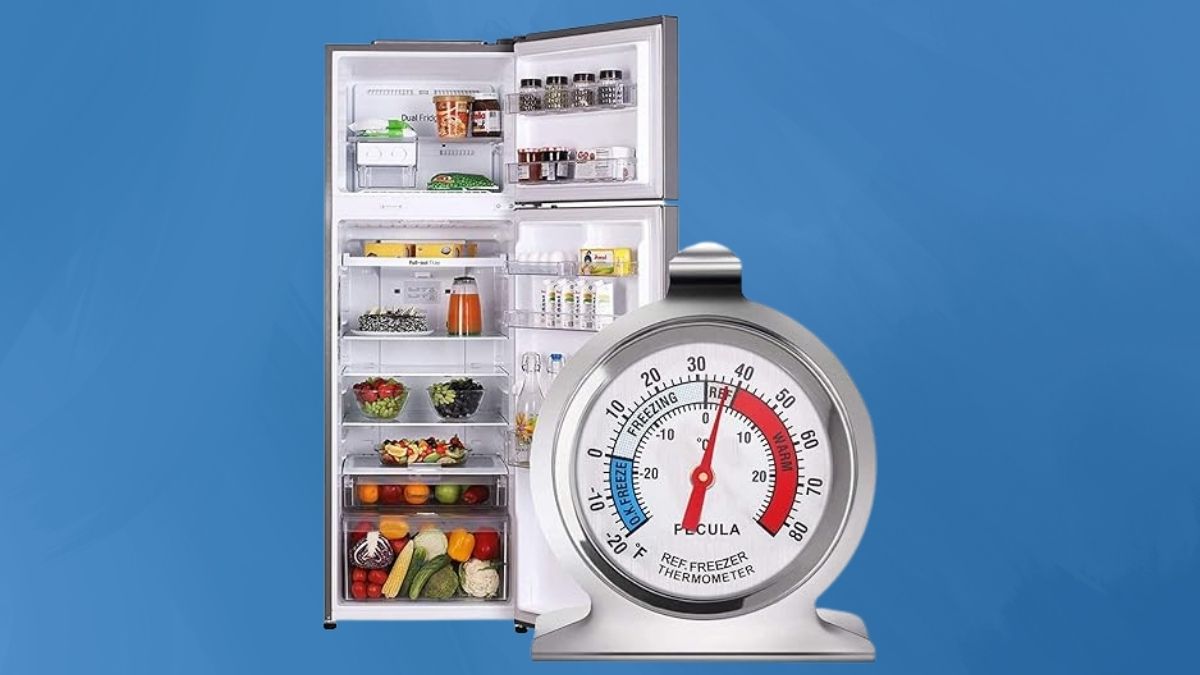
The thermometers arrive looking unassuming—round stainless steel bodies with wide faces and sturdy glass covers. What stands out immediately is their clarity. The numbers are large, and the dial is divided into blue and red safety zones. The bright red pointer is easy to read even in the dim glow of a refrigerator light. They feel surprisingly solid in hand, with a design that’s functional rather than flashy.
Real-World Use
I placed one thermometer on the middle shelf of my fridge, the other in the center of my freezer. After letting them stabilize for about an hour, the readings gave me an honest look at what my appliances were doing.
My fridge was hovering slightly above the safe zone, which explained why milk was spoiling quicker than expected. A small adjustment later, the dial dropped into the ideal 35°F–38°F range. The freezer, on the other hand, held steady at 0°F—exactly where it should be.
This kind of straightforward monitoring is where these thermometers shine. They aren’t trying to give you graphs, Wi-Fi alerts, or ultra-precise decimals. Instead, they answer the simple question: “Is my fridge cold enough?”
Why It Matters
It’s easy to underestimate how much money and effort can be saved by keeping your refrigerator and freezer at the right temperatures.
According to food safety guidelines, anything above 40°F in a fridge puts food at risk of faster bacterial growth. Meanwhile, freezers need to stay at or below 0°F for long-term storage. A thermometer inside helps you see when adjustments are needed—especially during the warmer months when appliances are working harder than usual.
For me, it was a small shift that led to fewer spoiled groceries and more confidence in what I was feeding my family.
Analog Versus Digital
Digital thermometers may look more modern, but I found myself preferring these analog ones. No batteries mean no upkeep and no risk of failure during a power outage.
Their mechanical design is resilient, so even if they get knocked over or frosted, they keep working. And honestly, I appreciate the immediacy of glancing at a dial with a bold red pointer instead of deciphering small numbers on a screen.
Beyond the Kitchen
Having two thermometers gives you options. One can go into your main fridge and the other into a freezer, or you can keep one for a secondary appliance in the garage. They’re also useful for RVs or vacation homes where battery-free reliability is especially valuable. In older appliances, they act almost like diagnostic tools—letting you know if your fridge or freezer is struggling to keep up.
Final Thoughts
The 2 pack refrigerator thermometer isn’t the kind of purchase that excites you at checkout, but it’s the kind that pays off quietly, every day. Stainless steel durability, battery-free operation, and clear, easy-to-read displays make them a reliable addition to any home kitchen. They give you confidence, help prevent waste, and remind you that sometimes the simplest tools are the ones that matter most.
And since this set is part of Amazon’s amazonhaul, it’s worth browsing other affordable and practical kitchen tools in the same category—you might discover more items that quietly make life easier.
Quick Takeaways
- Wide range: works in both fridges and freezers (−20°F to +80°F)
- Durable stainless steel body with clear glass lens
- Large, color-coded dial for easy reading
- No batteries required—mechanical reliability
- Flexible placement: can stand or hang inside the appliance
- Great value as a 2 pack, covering both fridge and freezer
Together, these points highlight why this simple set earns its place as a must-have tool for everyday kitchen reliability.