

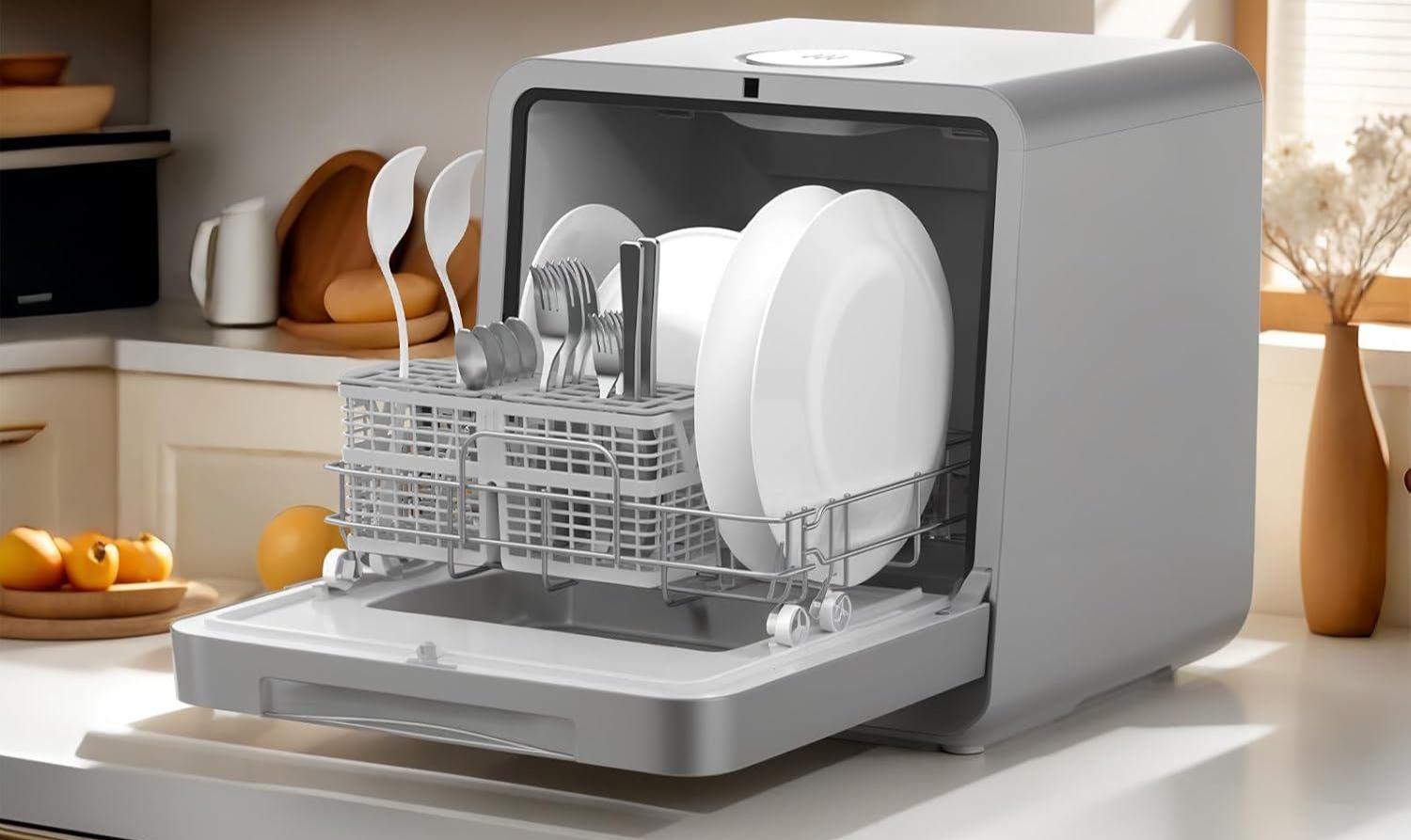
If you’re short on space or you can’t install a built-in dishwasher, the MOMOKOVA Portable Countertop Dishwasher is aimed at your exact problem. You get a compact machine with a 5L built-in water tank, so you can run cycles without connecting to a faucet every time.
That said, portable dishwashers can be a love-it or skip-it category. Some people want anything that reduces handwashing. Others find countertop units too small to justify the counter space. This guide walks you through both sides, so you can decide if it actually fits your daily routine.
What you’re getting at a glance
Here’s the core pitch, in practical terms:
- 5L built-in tank so you can run it without direct plumbing
- 7 wash settings to match different dish loads
- High-temp cleaning up to 167°F for tougher messes and added sanitation
- Compact footprint designed for apartments, dorms, RVs, and small kitchens
- Low noise level (around 45dB) for open layouts and shared spaces
If those points solve your biggest pain (handwashing with limited sink space), it may be a strong fit.
Two perspectives: why people buy it—and why some don’t
If you value convenience:
You’ll likely appreciate being able to load dishes, press start, and reclaim time. In a small kitchen, it also reduces the “dish pile” that takes over the sink.
If you value counter space and capacity:
You may hesitate because any countertop dishwasher competes with appliances like a microwave, air fryer, or coffee setup. And if you cook big meals often, you might still end up handwashing cookware.
Neither view is wrong. The right choice depends on your lifestyle: daily light loads vs. frequent heavy cooking.
Setup options you can actually use
The MOMOKOVA is built around flexibility, which matters if you rent or live mobile.
You typically have two ways to run it:
- Manual fill: pour water into the 5L tank, then start the wash
- Faucet connection (optional): use the hose if your faucet setup supports it
Manual fill is the headline feature, because it keeps you independent from plumbing. The trade-off is simple: you’re adding a small daily step (refilling) in exchange for not needing a dedicated hookup.
Wash programs and what they’re best for
Instead of listing features in a vacuum, here’s how the cycles usually map to real use.
| Program | Best for | Why you’d choose it |
| Normal | Everyday dishes | Balanced wash for routine loads |
| Quick / ECO | Light soil | Shorter run time and lower resource use |
| Strong / Baby Care | Heavier soil, baby items | Higher intensity for sanitation-focused cleaning |
| Glass | Glassware | Gentler parameters for fragile items |
| Fruit | Produce | Rinsing produce without harsh treatment |
| Dry | Extra drying | Helpful when you want dishes put away fast |
| Delay Start | Scheduling | Runs later to match your routine |
This variety is useful if your dish loads vary. If you wash the same type of items daily, you may only use 1–2 cycles most of the time.
Cleaning performance: where it helps, where it has limits
High-temperature cleaning up to 167°F can help with greasy residues and stuck-on food. If you’re moving from handwashing in lukewarm water, that jump can feel significant.
The unit’s spray system is designed to reach dishes from multiple angles. Still, your results depend on how you load it. With compact machines, over-stacking is the most common reason people get “meh” results.
What tends to go well:
- Plates, bowls, cutlery, cups, and lightly used cookware
- Daily loads that don’t sit too long before washing
Where you may hit limitations:
- Large pots, oversized pans, and bulky meal-prep containers
- Heavily baked-on food if you don’t pre-rinse or soak
If you expect it to replace a full-size dishwasher for a big household, you may be disappointed. If you treat it as a consistent helper for daily dishes, you’re more likely to be satisfied.
Objections you might have (and realistic answers)
“It’s too small.”
It can be. If you cook elaborate meals daily, you may still handwash cookware. But if you’re mainly tackling plates, cups, and utensils, the size can be enough to meaningfully reduce your workload.
“I don’t want to refill a tank.”
That’s fair. Manual filling is the price of plumbing-free operation. If you already dislike any extra steps, you may prefer faucet hookup—or skip countertop entirely.
“Will it take up too much counter space?”
In a tiny kitchen, it might. The best compromise is placing it on a sturdy cart or a dedicated corner, so it doesn’t disrupt your prep area.
“Is it worth it compared to handwashing?”
If your main cost is time and effort, you’ll likely feel the difference quickly. If you rarely cook or you don’t mind washing by hand, the value is lower.
Who it’s best for
You’re the right user if you want convenience without permanent installation, especially in:
- Apartments and rentals
- Dorm rooms
- RVs and campers
- Tiny homes and boats
- Small offices and break rooms
If you regularly wash dishes for 3–5 people, you may want a larger solution.
The decision you should make
If your biggest problem is no dishwasher hookup, the built-in tank is the feature that matters most. If your biggest problem is dish volume, a countertop unit may feel like a partial fix.
Available on Amazon, the MOMOKOVA makes the most sense when you want fewer dishes in the sink, less daily handwashing, and a compact machine that works in spaces where built-ins aren’t possible.