

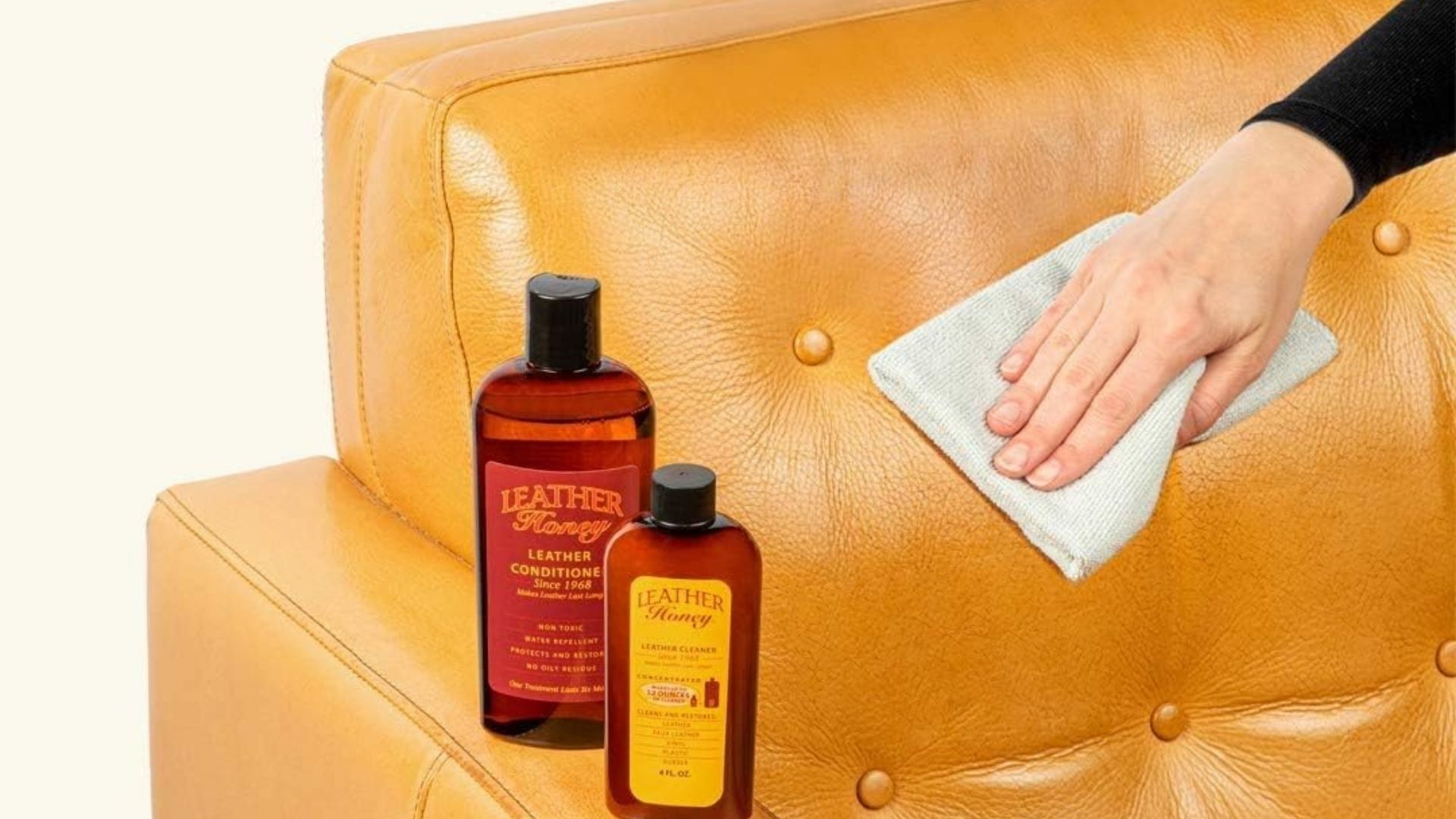
Leather looks better with age, but only if you help it age well. Without conditioning, leather slowly loses moisture and flexibility. It can start to feel stiff, look dull, and show early cracking in high-wear spots.
Leather Honey Leather Conditioner is positioned as a long-term care product, not a quick shine. It has a long brand history, and it is designed to absorb into finished leather to support softness and resilience. You will also find it easy to use once you understand the “thin coat and wait” approach.
What you’re really buying with Leather Honey
Leather conditioners can be confusing because they do different jobs. Some add gloss. Some mask dryness for a week. Others focus on deeper conditioning. Leather Honey sits in that last category.
Before getting into the details, it helps to frame the product from a few angles. That way, you can decide if it fits your leather and your expectations.
The “deep conditioning” perspective
From this view, Leather Honey is about restoring flexibility.
- Designed to penetrate finished leather instead of just coating the top
- Helps reduce the stiff, papery feel that shows up as leather dries out
- Best for maintenance and revival, especially on older pieces
The “protection” perspective
From this angle, it is more about prevention than repair.
- Creates a barrier that helps leather resist moisture and everyday wear
- Useful for items exposed to friction, heat, and changing humidity
- Can reduce how often you need to condition compared to lighter products
The “cleaner ingredient” perspective
Some buyers care less about “results fast” and more about what is inside.
- Often described as free from silicone and harsh solvent-type additives
- Typically favored by people who want a more straightforward conditioner
- Better suited to households that avoid strong chemical odors
Where Leather Honey works best, and where it doesn’t
Not all “leather-looking” materials behave like real leather. The biggest results tend to come when the material can absorb conditioner properly.
Before you apply anything, match the product to the surface.
Best use cases
Leather Honey tends to make the most sense for finished leather, including:
- Leather furniture (couches, chairs, recliners)
- Car seats and automotive leather interiors
- Leather jackets, belts, boots, and bags
- Tack and equestrian gear that needs flexibility
Surfaces to avoid
This is where many disappointments happen. Leather Honey is usually not a fit for:
- Suede or nubuck (texture can change)
- Faux leather or vinyl (does not absorb the same way)
- Very delicate antique leather (may require specialist care)
The application method that prevents most problems
This product is concentrated. That is a benefit, but it also means over-applying is the most common mistake.
Before you start, clean the leather with a leather-safe cleaner. Dirt and old product can block absorption and create uneven results.
Here is the basic process.
- Spot test first in a hidden area
- Apply a very thin layer using a lint-free cloth
- Work in small sections so coverage stays even
- Let it absorb for at least a few hours, ideally overnight
- Buff off any excess if the surface feels tacky
If you are treating very dry areas, a second light coat later is usually safer than one heavy coat.
What results you can realistically expect
Leather Honey can make leather feel noticeably softer and look richer, but it will not “erase” physical damage.
Here is a simple expectation guide.
| Leather condition | What you may notice | What it won’t do |
| Light dryness | Softer feel, better tone | Won’t add a glossy shine unless you buff heavily |
| Moderate dryness | Improved flexibility, less dullness | Won’t remove deep creases |
| Early cracking | Cracks may look less harsh as leather softens | Won’t rebuild missing leather fibers |
| Heavy wear | Better comfort and less stiffness | Won’t replace restoration work for severe damage |
Potential objections and limitations to know upfront
Even if a product is well-liked, it can still be the wrong choice for your situation. These are the most common issues buyers run into.
“Will it darken my leather?”
It can, especially if your leather is very dry. Dry leather often looks lighter than it should. As it rehydrates, the tone may look deeper. A spot test is the easiest way to gauge this.
“I want fast results without waiting.”
This may not be your favorite conditioner. Leather Honey works best when you give it time to absorb. If you need quick cosmetic shine for a short-term look, a different product may fit better.
“I used too much and it feels sticky.”
That usually means the coat was too thick. Buffing with a clean cloth often fixes it. Next time, use less than you think you need.
“Can I use it on suede or nubuck?”
It is generally better to avoid it. Those materials need specialized products to protect the nap and texture.
How often you should condition
For many people, conditioning every six months is a practical baseline. But your environment matters.
- Dry climates and heated indoor air can shorten the interval
- Cars exposed to sun and heat may need more frequent care
- Lightly used furniture may go longer between applications
A simple check is touch. If the leather feels dry, stiff, or less supple than it used to, that is your cue.
Where it fits in your leather care routine
Leather Honey works best as a conditioner step. If your leather is dirty, always clean first. If you are managing stains or heavy wear, you may also want a dedicated protectant that matches your leather type.
This product is part of Amazon New Best Sellers in the Leather Care category, and you can explore more products in this category to compare formulas, finishes, and use-case fit.