
Beach waves look effortless, but styling them at home can feel like anything but. A traditional wand asks you to wrap, hold, time, and repeat—then hope both sides of your head match. If your hair slips, tangles, or overheats, you lose time and end up redoing sections.
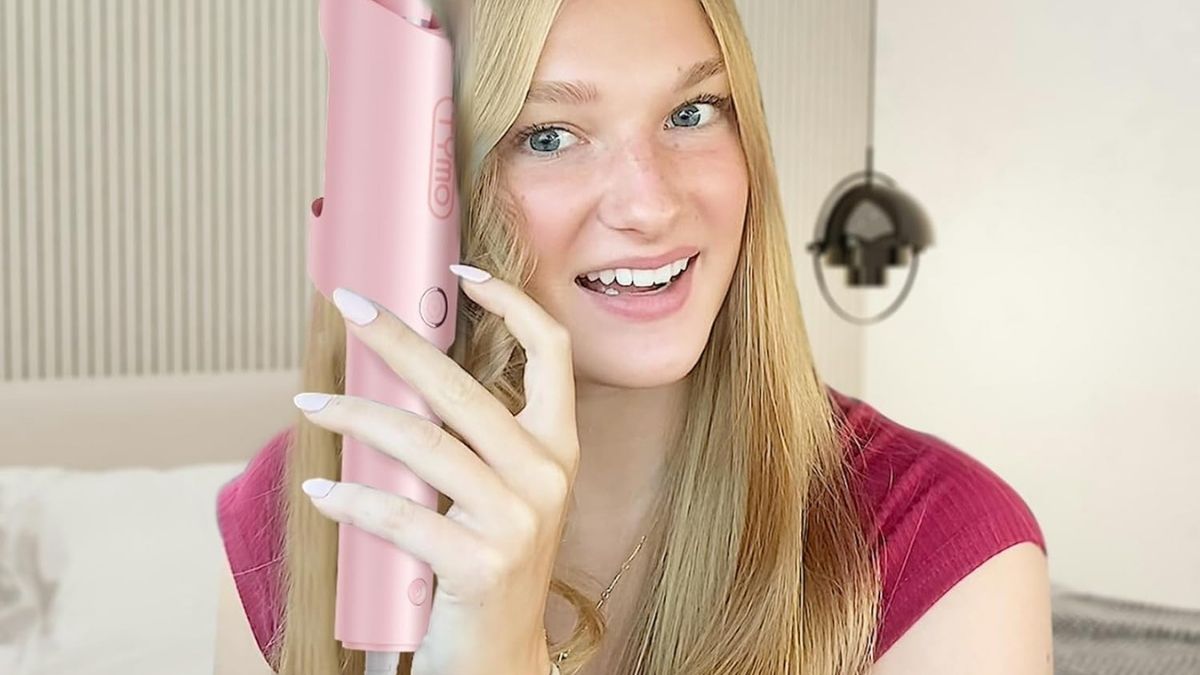
The TYMO Automatic Rotating Curling Iron takes a different approach. You clamp a section, press a button, and let the barrel rotate for you. That automation can be a big deal if you’re new to curling, short on time, or just tired of uneven results.
Still, it’s not a perfect fit for everyone, and it helps to understand both the upside and the tradeoffs before buying.
What makes the TYMO CurlPro different from a standard curling iron
Automatic curlers aren’t new, but the details matter. TYMO focuses on reducing two common problems: inconsistent technique and painful tangles.
Before you get into features, it’s useful to know what this tool is trying to solve.
Key differences you’ll notice
- One-click auto-rotation so you don’t manually twist your wrist
- Anti-tangle detection that can reverse rotation if too much hair is caught
- 1-inch (25 mm) barrel that leans toward beach waves and relaxed curls
- Lightweight feel that can reduce arm fatigue during longer sessions
If you’ve struggled with getting the same curl shape throughout your hair, the auto-rotation and timed approach can make results more uniform.
How the ceramic coating and ionic output affect your hair
Heat quality matters as much as convenience. TYMO uses a ceramic-coated barrel designed to smooth glide and distribute heat more evenly than bare metal. That can help reduce hot spots that overcook certain strands while leaving others under-curled.
To frame it clearly, there are two common perspectives here. One side prioritizes lower friction and smoother styling. The other side points out that “gentler” surfaces don’t cancel out heat damage if you use high temps too often. Both can be true. Ceramic can help, but your heat setting and frequency still do most of the damage-control work.
Ionic output is aimed at frizz management. If your hair tends to puff up in humidity, the smoothing effect can help curls look more defined instead of fuzzy.
Heat settings and who they fit best
TYMO keeps heat selection simple with three presets. That simplicity can be a benefit if you don’t want to guess between five or six temperatures. The limitation is that you have fewer “in-between” options if your hair sits in the middle.
Here’s a quick guide to choosing a setting.
| Heat setting | Best for | What to watch for |
| 320°F | Fine, fragile, color-treated hair | Use smaller sections for better hold |
| 365°F | Medium thickness or average texture | Balance hold and shine with less rework |
| 410°F | Thick, resistant hair | Use heat protectant and avoid repeat passes |
A built-in styling timer also helps standardize curl time. That’s helpful for consistency, but if your hair needs a longer hold, you may have to work in smaller sections instead of simply “holding longer.”
How to get different curl styles with the same tool
Even with automation, your technique still matters, just in a simpler way. Section size, direction, and finishing steps decide whether you end up with loose waves or tighter curls.
Before you switch up your routine, keep one idea in mind: consistency creates polish, while intentional variation creates texture.
Style adjustments that change the final look
- Looser beach waves: larger sections, lower heat, brush out gently after cooling
- More defined curls: smaller sections, mid heat, let curls cool before touching
- More volume at the root: curl away from the face on top layers and avoid heavy oils
Prep products also matter. Heat protectant is non-negotiable. If your hair struggles to hold curl, a light mousse before blow-drying can help more than piling on hairspray afterward.
Ease of use: why beginners may love it, and why some won’t
If you want a straightforward experience, an auto-rotating curler can feel like training wheels in the best way. You focus on clean sectioning and placement rather than wrist technique. That usually shortens the learning curve.
On the other hand, experienced users sometimes prefer manual tools because they can micro-control tension, angle, and curl pattern. With an automatic tool, you trade some creativity for speed and repeatability.
A practical way to decide is this: if your biggest issue is inconsistency, automation helps. If your biggest goal is custom styling precision, a traditional wand may still win.
Potential objections and real limitations to consider
This tool solves several pain points, but it’s not magic. If you’re deciding whether it’s worth it, these are the most common “hold-up” concerns.
Common drawbacks to factor in
- Less manual control than a wand for custom curl shapes
- Sectioning still matters and rushed sections can cause snags
- Very long or very thick hair may take longer, even with rotation
- High heat is still high heat so frequent use needs good protection
Curl longevity also depends on your hair type and climate. If you’re in high humidity, you may still need a finishing spray or anti-frizz serum to keep definition.
Where the TYMO CurlPro fits best
If you want faster styling with fewer technique variables, TYMO makes sense. It’s especially useful if you’re trying to get consistent waves for workdays, events, or quick routines. If you love experimenting with different curl patterns and barrel sizes, you may feel more limited than you would with a traditional iron.
Available on Amazon, this item is part of Amazon Today’s Deals in the Beauty & Hair Styling Tools category, where you can also explore more discounted curlers, wavers, and heat-styling essentials.