

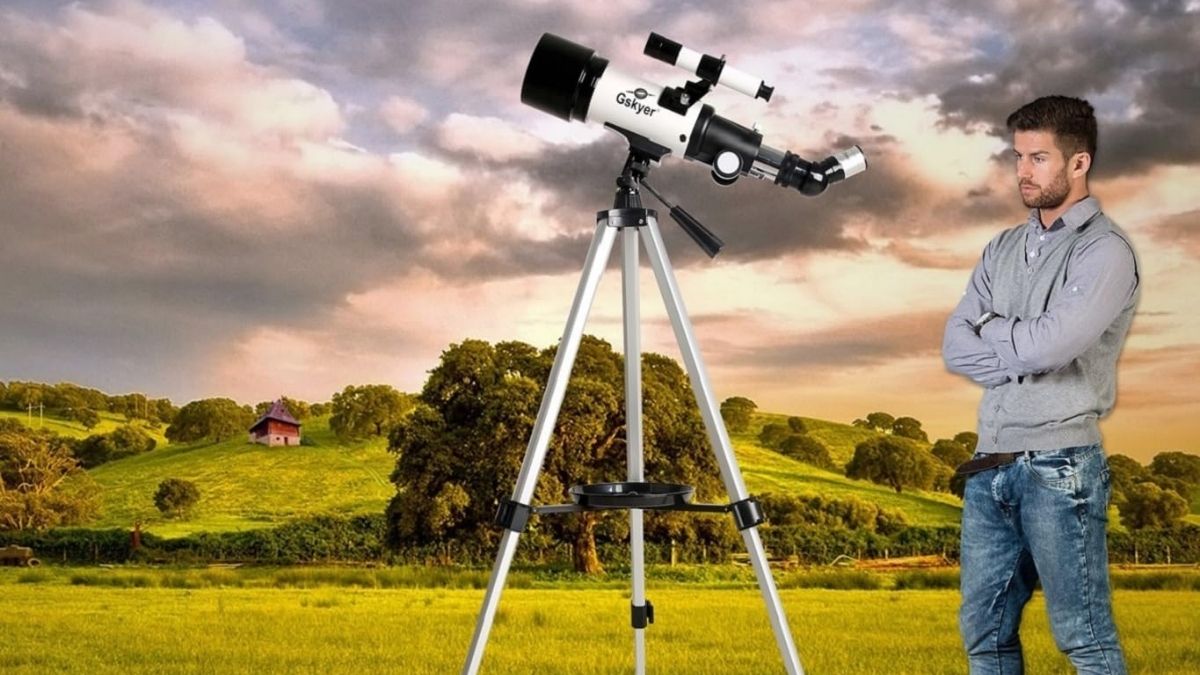
There’s something endlessly captivating about stepping outside at night, pointing a telescope toward the sky, and realizing those glowing dots aren’t just lights—they’re worlds.
If you’ve ever wanted that experience without spending a small fortune or wrestling with a complicated setup, the Gskyer 70mm AZ70400 is one of those beginner-friendly telescopes people often stumble across. After spending time with it, here’s what stands out.
A Few Thoughts Before We Break it Down
Before jumping into the finer details, it’s worth saying upfront: this telescope isn’t trying to compete with high-end reflectors or professional gear. Instead, it aims to make astronomy approachable. And in that sense, it hits a comfortable middle ground—simple enough for first-timers, yet capable enough to deliver meaningful views.
What Comes Inside the 40mm-Class Telescope Package
Before diving into performance, it helps to know exactly what you’re working with. This telescope arrives as a thoughtfully assembled starter set, giving beginners everything they need to begin exploring the night sky without hunting for extra parts.
A Starter Kit Designed for New Explorers
The Gskyer 70mm AZ70400 arrives as a full kit, which is helpful if you’re new to astronomy and aren’t ready to piece together components. Inside the box you get:
- 70mm refractor optical tube
- Two eyepieces: 25mm (16x) and 10mm (40x)
- 3x Barlow lens
- 5×24 finderscope
- Erect-image diagonal
- Aluminum tripod with accessory tray
- Smartphone adapter + wireless remote
- Carry bag
It’s a surprisingly complete bundle, especially for those who want a single purchase that provides everything needed to start observing right away.
Setting It Up: Straightforward and Beginner-Friendly
Before you worry about star charts or magnification, you’ll be glad to know that getting this telescope ready is refreshingly simple. Even first-time users will find the process unintimidating from the moment they open the box.
Clear Assembly with No Tools Required
One of the strongest points in favor of this telescope is the setup experience. Most people can go from unboxing to observing in about 15–20 minutes. The alt-azimuth mount moves naturally—up/down and left/right—so there’s no intimidating learning curve like with an equatorial mount.
Aligning the finderscope is the only part that takes some care, but doing it in daylight simplifies things. The aluminum tripod feels lightweight but generally stable enough for visual observing. Minor vibrations happen when focusing, but they settle quickly.
Parents will appreciate that children around 8–10 years old can learn to operate it with a little guidance. The whole setup is also light enough for older kids to carry or reposition on their own.
Optical Performance: What You Can Expect to See
Once everything is set up, the real magic happens at the eyepiece. This is where the telescope proves what it can genuinely deliver, especially for beginners eager to see their first lunar craters or planetary details.
Surprisingly Solid Views for a 70mm Refractor
For its size, the Gskyer offers bright, satisfying views—especially of nearby celestial objects.
On the Moon:
Craters along the terminator look crisp, while maria and ridges show noticeably different textures. The Moon alone makes this telescope worth the effort.
On the planets:
- Jupiter’s brightest bands and its moons appear clear
- Saturn’s rings are visible, along with Titan
- Venus shows phases
- Mars appears as a red disk (fine detail is challenging)
On deep-sky objects:
You’ll be able to view brighter objects such as:
- Pleiades (M45)
- Orion Nebula (M42)
- Andromeda Galaxy (M31) as a soft glow
A 70mm aperture does have limits, particularly with faint galaxies and nebulae, but that’s expected.
A Bonus: Terrestrial Viewing
Thanks to the erect-image diagonal, daytime viewing becomes part of the package. Wildlife watching, landscapes, and even distant architectural details become accessible, giving the telescope year-round usefulness beyond night-sky outings.
Accessories: Functional with Room to Grow
The included Kellner eyepieces are basic but serviceable. The 25mm provides the most comfortable viewing. The 3x Barlow works better than expected, though pushing magnification too far will cause dimming and blur due to the natural limits of a 70mm lens.
The smartphone adapter is fun for beginners wanting to snap their first Moon photos. They won’t look like NASA shots, of course, but they’re rewarding nonetheless.
Users who stick with the hobby often upgrade eyepieces and the finderscope within the first year—common with all beginner telescopes, not just this one.
Portability & Ease of Travel
At just under 3 kg, this telescope is easy to carry, store, and transport. It fits in a car trunk with room to spare, and the included bag keeps everything organized. For those who want casual stargazing at the park, beach, or countryside, the Gskyer’s quick setup and compact size are major advantages.
Who This Telescope Works Best For
This telescope is an excellent match for:
- Kids and teens beginning to explore astronomy
- Adults curious about stargazing who want a risk-free entry point
- Families who want an educational tool to share
- Casual observers interested primarily in lunar and planetary views
- Anyone needing a telescope that doubles as a daytime spotting scope
Those planning a deeper dive into astrophotography or faint galaxies will eventually need to upgrade—but for beginners, this is a friendly, accessible place to start.
In Summary
The Gskyer Telescope 70mm AZ70400 delivers a balanced mix of usability, portability, and value. It won’t replace larger, more advanced telescopes, but it fulfills its purpose well: making astronomy welcoming. For many first-timers, this model provides the “wow” moment that fuels further exploration.
Since it’s also featured in Amazon Holiday Gifts, you might enjoy browsing other items in the same category—there’s a whole range of beginner-friendly astronomy gear worth exploring.