

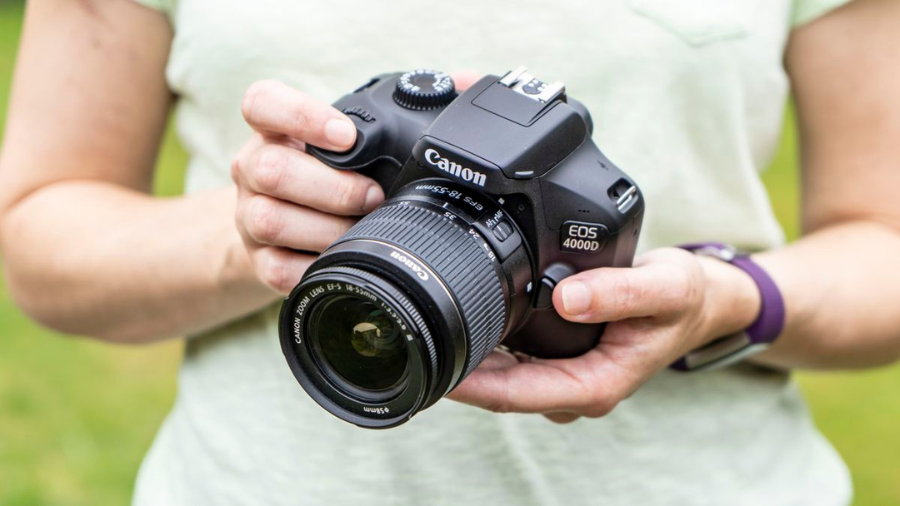
The photography world can be intimidating for newcomers, especially with hefty price tags attached to professional equipment. I remember my first camera purchase—the anxiety of investing in something I wasn’t sure I’d master. That’s where the Canon EOS 4000D steps in. Currently sitting at #8 on Amazon’s Best Sellers list for DSLRs, this camera has become the gateway for thousands of photography enthusiasts. With its 18.0 MP APS-C sensor and budget-friendly price point, it strikes the perfect balance between accessibility and capability. But does this entry-level DSLR deliver enough quality to justify even its modest price tag? Let’s find out.
Technical Specifications: What’s Under the Hood
Sensor and Image Processing
The Canon EOS 4000D (also known as the Rebel T100) features an 18.0 MP APS-C CMOS sensor measuring 22.3 × 14.9 mm. This resolution provides ample detail for most photography needs while maintaining manageable file sizes. The camera employs Canon’s DIGIC 4+ image processor, which, while not the newest in Canon’s lineup, efficiently handles image data and contributes to the camera’s reasonable operational speed.
Performance Metrics
With a continuous shooting speed of up to 3 frames per second, the 4000D handles casual action photography scenarios adequately. The buffer allows for unlimited JPEG captures or up to 6 RAW images in sequence. Its ISO range spans from 100 to 6400, with an expanded option reaching 12800, providing flexibility in various lighting environments.
Autofocus and Display Systems
The 9-point autofocus system incorporates one cross-type center point for more accurate focus acquisition. While modest by current standards, this system proves sufficient for deliberate photography. The optical pentamirror viewfinder offers 95% frame coverage with 0.8× magnification—standard specifications for entry-level DSLRs. For image review and menu navigation, the camera features a 2.7-inch fixed TFT LCD with approximately 230,000 dots.
Performance in Real-World Situations: Strengths and Limitations
Image Quality Assessment
In favorable lighting conditions, the 4000D produces surprisingly good photos with rich color rendition and satisfactory detail. The 18MP sensor, while not class-leading in resolution, captures sufficient information for typical print sizes and online sharing. Dynamic range, while not exceptional, handles moderate contrast scenes effectively.
Low Light Capabilities
When shooting in dimmer environments, the camera maintains usable image quality up to ISO 3200, though noise becomes increasingly apparent beyond this point. The expandable ISO 12800 setting, while available, introduces significant noise and should be reserved for situations where capturing the moment outweighs perfect image quality.
Operational Longevity
Battery performance stands as a notable strength of the 4000D. With approximately 500 shots per charge using the LP-E10 battery (by CIPA standards), this DSLR outlasts many mirrorless competitors that typically manage 300-350 shots. This extended capacity proves particularly valuable for day-long shooting sessions.
Focusing Performance
The autofocus system performs reliably for still subjects and deliberate photography but reveals limitations when tracking fast-moving subjects. The single cross-type point at the center delivers the most consistent results, making the focus-and-recompose technique valuable for this camera.
Construction Considerations
The 4000D’s budget-oriented design is evident in its plastic construction, including the lens mount—a notable compromise compared to the metal mounts found in higher-tier models. This design choice necessitates careful handling to ensure longevity, particularly when changing lenses.
The EF-S 18-55mm Kit Lens: Your First Photographic Tool
Versatility and Design
The bundled EF-S 18-55mm lens provides a versatile focal range equivalent to 29-88mm on full-frame cameras, covering most everyday scenarios from moderate wide-angle to short telephoto. Its compact and lightweight construction complements the camera body, creating a balanced package that remains comfortable during extended use.
Optical Performance
This kit lens delivers decent sharpness in the center of the frame, particularly when stopped down to f/8 where it reaches its optical sweet spot. Edge sharpness improves significantly when stepping down from maximum aperture. As expected with entry-level zoom lenses, some vignetting and corner softness appear at wider apertures.
Practical Considerations
The absence of image stabilization in this particular kit lens variant requires steady hands or support in lower light conditions. The manual focus override capability proves useful when precision is required or in situations where autofocus struggles. Despite its limitations, this lens serves as an excellent learning tool while photographers develop their skills.
Connectivity and Sharing: Getting Your Photos to Social Media
Wireless Capabilities
The 4000D incorporates built-in Wi-Fi connectivity, enabling wireless image transfer to smartphones via the Canon Camera Connect application. This functionality extends to remote shooting, allowing users to control essential camera functions from their mobile devices—particularly useful for self-portraits, group photos, or specialized shooting scenarios.
Transfer Options
The wireless connection facilitates direct sharing to social media platforms through the smartphone app, streamlining the publishing process. The camera relies solely on Wi-Fi for wireless connectivity, lacking the Bluetooth or NFC options found in newer models that enable faster pairing and continuous connection.
Connection Management
File transfer procedures remain straightforward and accessible for beginners, with intuitive menu navigation. For those preferring physical connections, the camera offers standard USB connectivity, though it uses the older micro-USB standard rather than faster USB-C ports found in current models.
Who Should Buy This Camera: The Ideal 4000D Photographer
Educational Applications
Photography students will find the 4000D an accessible entry point into fundamental photographic principles. Its manual controls, interchangeable lens capability, and optical viewfinder provide the traditional learning experience at a fraction of the cost of more advanced models.
Consumer Segments
Casual photographers transitioning from smartphone photography gain substantial image quality improvements without overwhelming complexity. Budget-conscious hobbyists receive core DSLR functionality without paying for advanced features they may rarely use. Content creators with limited budgets can leverage the improved image quality for their productions.
The Verdict: Is the Canon EOS 4000D Right for You?
The Canon EOS 4000D with its 18-55mm kit lens represents exceptional value in the DSLR market. Its Amazon best-seller status speaks volumes about its appeal to beginners. While it lacks the bells and whistles of pricier models—touchscreen, articulating display, 4K video—it delivers where it matters most: taking good photos reliably. The plastic construction and basic features are reasonable compromises at this price point. For anyone taking their first steps beyond smartphone photography, this camera offers a genuine DSLR experience without overwhelming complexity. Its limitations become learning opportunities, forcing new photographers to master fundamentals rather than rely on advanced features. If you’re entering the photography world with realistic expectations and a desire to learn, the Canon EOS 4000D could be the perfect companion on your creative journey.