

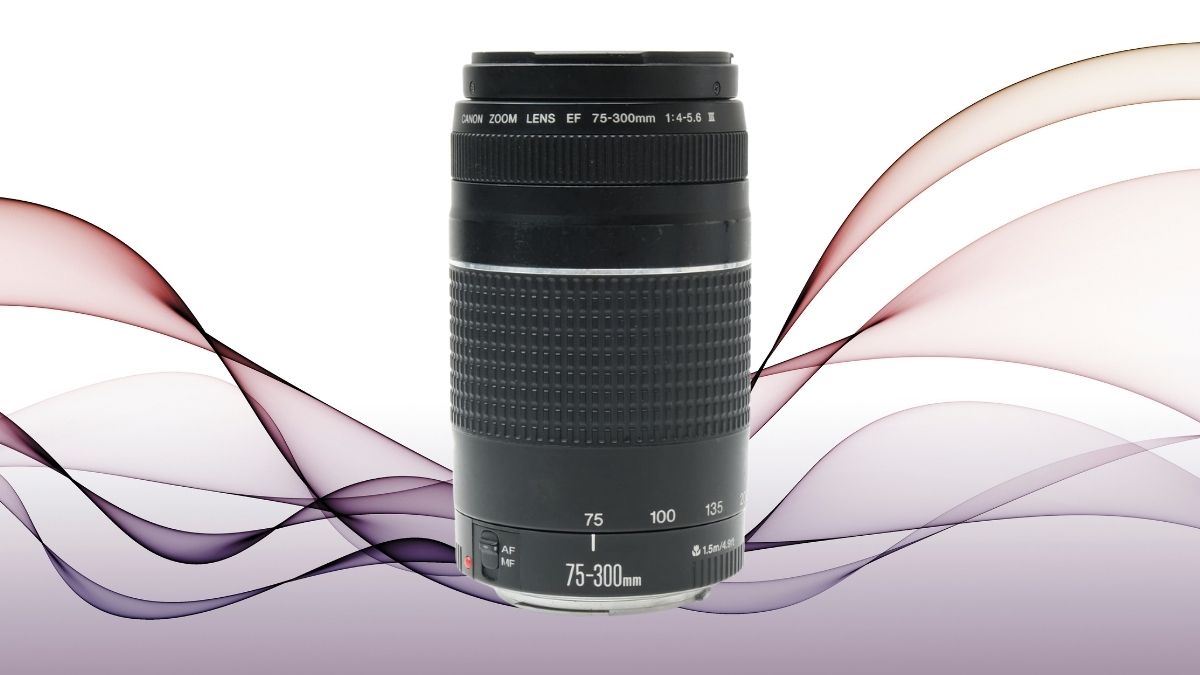
Telephoto lenses often come with heavy price tags and professional expectations—but not everyone needs top-tier performance right away.
If you’re just stepping into long-range photography or building your kit on a budget, you may be wondering: Is now the right time to invest in a telephoto lens? And more specifically, is the Canon EF 75-300mm f/4-5.6 III the one to start with?
With over 1,200 positive Amazon reviews and a price hovering around $209.99, this lens clearly fills a gap. But timing matters. Here’s when this lens makes sense—and when it doesn’t.
When You’re Just Starting with Telephoto Photography
The Canon EF 75-300mm f/4-5.6 III is built for entry-level users who want reach without complexity or cost.
Its 75–300mm focal range lets you explore a wide variety of telephoto scenarios—wildlife, sports, portraits, and more—without needing a background in pro-level gear.
- Why now? You’re learning, experimenting, and need a low-commitment way to explore longer focal lengths.
- Ideal user: Beginner DSLR shooters or hobbyists who own a Canon body (EF or EF-S mount) and want a second lens with more reach.
When Budget Is a Priority Over Features
At one-third the cost of Canon’s higher-end telephotos, this lens trades premium features for accessibility. It doesn’t offer image stabilization or weather sealing, but it does give you real telephoto range and usable optical performance—without financial strain.
- Why now? You’re not ready to spend $500+ on a lens you’re not sure you’ll use often.
- Ideal scenario: You want to try telephoto shooting for outdoor events, travel, or learning purposes—without long-term commitment.
When Weight and Portability Matter
This lens weighs just 16.8 ounces and is under 5 inches long, making it highly portable. It’s one of the few telephoto zooms you can toss in a day bag without weighing yourself down.
- Why now? You’re planning a trip, hike, or event and want a telephoto option that won’t require a dedicated gear bag.
- Best use case: Travel, zoo visits, outdoor festivals, or vacation photography where you may only need a long lens occasionally.
When You Shoot Primarily in Good Light
Because the lens lacks image stabilization and has a variable aperture (f/4 at 75mm to f/5.6 at 300mm), it performs best when light is abundant. It’s a good match for daylight photography where you can maintain faster shutter speeds and lower ISO settings.
- Why now? You’re shooting outdoors—wildlife, nature walks, parades, or sports games in the daytime.
- Avoid if: You shoot indoors, at dusk, or in unpredictable lighting where image stabilization would be necessary.
When You Don’t Need Speed or Close Focus
The autofocus system uses a micromotor rather than Canon’s faster USM or STM tech.
It’s fine for stationary or moderately moving subjects, but don’t expect blazing speed or silent operation. Also, with a minimum focusing distance of 1.5 meters (about 5 feet), this isn’t a close-up lens.
- Why now? You’re capturing slower-moving subjects from a distance—portraits, landscapes, or casual wildlife.
- Consider upgrading if: You plan to shoot indoor sports, concerts, or fast-action wildlife.
When You Want to Pair It With an APS-C Body
On Canon crop-sensor cameras (like the Rebel series), this lens delivers an effective focal length of roughly 120–480mm. That makes it even better for shooting distant subjects without investing in a high-end super-telephoto.
- Why now? You already own an APS-C DSLR and want maximum reach for minimal investment.
- Bonus: Compatible with full-frame EF-mount cameras too, if you ever upgrade.
When You’re Deciding Between It and the Alternatives
Compared to Canon’s EF-S 55–250mm f/4–5.6 IS STM, this lens offers broader compatibility but fewer features.
The 55–250mm is sharper, has image stabilization, and faster focusing—but only works on APS-C bodies. On the other hand, the 70–300mm IS II USM outclasses both—but at triple the price.
- Why now? You need something affordable, flexible, and usable across both crop and full-frame Canon systems.
- Skip it if: You’ve already outgrown beginner glass or have the budget for image stabilization and faster AF.
When This Lens Makes the Most Sense
Buy the Canon EF 75-300mm f/4-5.6 III when you’re:
- Starting out in telephoto photography and want to learn affordably
- Shooting mostly outdoors in good lighting
- Looking for a lightweight lens to travel or practice with
- On a strict budget but still want long reach
- Using a Canon EF or EF-S mount DSLR and want broad compatibility
Hold off if you’re planning to shoot fast action in low light, need professional-level sharpness at 300mm, or can afford lenses with built-in image stabilization.
You can find this lens on Amazon, making it easily accessible with buyer reviews and shipping options. For what it costs, it offers a respectable way to extend your creative range—and learn what you really need in your next lens upgrade.