

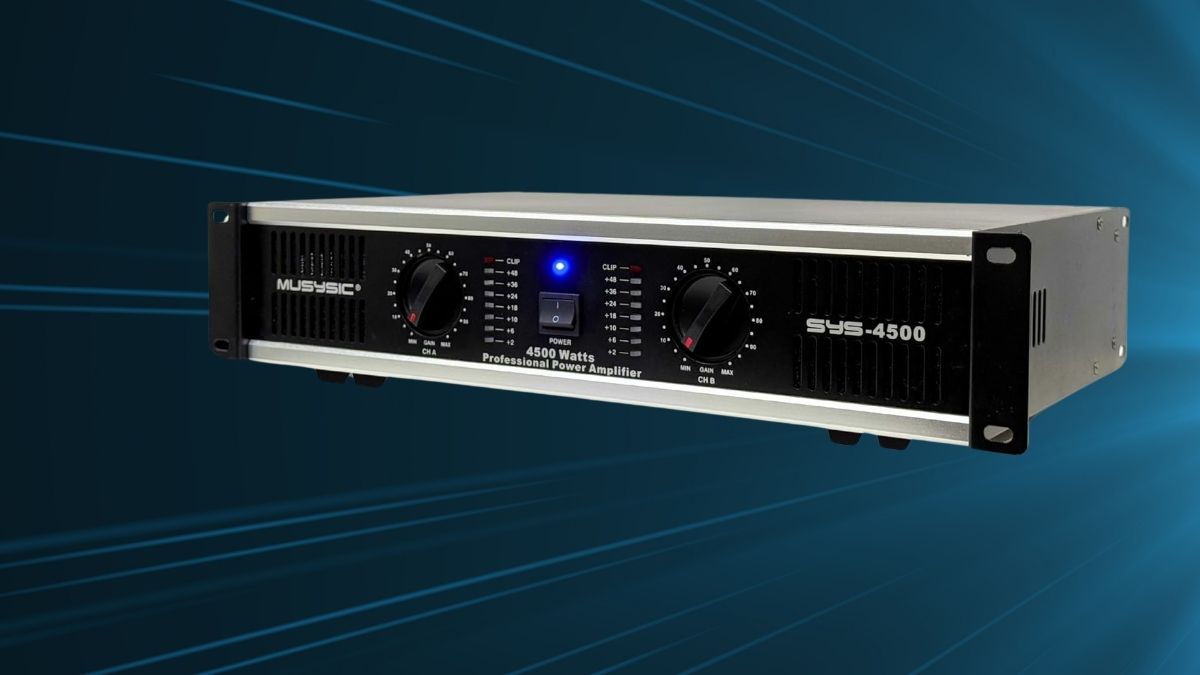
In professional audio, the tools behind the scenes are just as critical as the performers on stage. The MUSYSIC SYS-4500 2-Channel Power Amplifier is designed to meet the high demands of DJs, sound technicians, and installation teams, offering a powerful combination of output strength and sound clarity. It’s built to support both live performances and fixed sound systems, focusing on results rather than flashy features.
For users putting together or expanding a PA system—especially in places like schools, clubs, or churches—this amplifier offers useful features without going over budget. It avoids unnecessary gimmicks, and instead focuses on practical design choices like multiple connection types and reliable cooling. In this review, we take a closer look at how the SYS-4500 works, how it fits into different setups, and where it shines best.
Performance and Output Versatility
At its core, the SYS-4500 is designed to handle diverse audio demands. The amplifier’s power and flexibility are among its most important features:
- 4500 watts peak power means it can get very loud when needed.
- RMS power levels (the steady, reliable power it delivers):
- 2200W when connected to low-resistance (2-ohm) speaker setups.
- 1100W at 4 ohms.
- 550W at 8 ohms.
- Wide frequency range (10Hz to 50kHz) helps it handle all kinds of sounds—from deep bass to high treble.
- Very low distortion (under 0.1%) keeps the music or audio clear and natural even at high volumes.
These capabilities help the amplifier work well with different types of speakers, and in different sized rooms or venues.
Sound Quality and Engineering
To keep sound crisp and detailed, the amplifier uses a few special features:
- Accelerated Transient Response (ATR): Helps the amplifier react quickly to sudden changes in sound—like a loud drum hit or sharp vocal.
- Signal-to-noise ratio over 90 dB: This means there’s very little background hiss or noise when the music is quiet.
- 0.77V input sensitivity:
- Works well with most mixers and audio systems.
- No extra equipment is needed to connect it properly.
Together, these features allow the amplifier to handle fast-paced, dynamic music while keeping everything clean and balanced. This makes it easy to integrate into existing setups without requiring special preamps or gain adjustments, preserving the intended audio balance throughout the signal chain.
Build Quality and Installation Considerations
The amplifier’s physical design reflects a balance between portability and durability. Physically, the SYS-4500 is built to be sturdy but manageable:
- Weight: Around 20 pounds, light enough for one person to carry.
- Size: Fits in a standard 2U audio rack (about 3.5 inches tall).
- Cooling system:
- Two fans pull cool air in from the front and push warm air out the back.
- Helps prevent overheating during long events or shows.
Connection types include:
- Inputs: Balanced XLR and ¼” TRS jacks for audio signals.
- Outputs: Speakon connectors (which lock in place) and banana binding posts (for standard speaker wires).
Power switching:
- Can run on both 115V and 230V power, making it useful in different countries without extra adapters.
Practical Deployment and System Compatibility
The amplifier is compatible with many speaker types, including:
- Subwoofers for deep bass.
- Two-way speakers for general use.
- Line arrays for larger events.
It works well in:
- Mobile setups (like DJs who move between gigs).
- Permanent installs (like school auditoriums or churches).
To keep it running smoothly:
- Leave space around it for airflow—this helps the fans cool it properly.
- Clean the fans now and then to avoid dust buildup.
- Use strong rack support if you’re moving it often, since the built-in rack ears may wear over time.
Though some users note the rack ears could be more reinforced for repeated installation cycles, this is a minor concern that can be mitigated with rack rails or careful handling.
Where It Stands in the Real World
In practice, the SYS-4500 earns a reputation for being dependable rather than flashy. It doesn’t come with elaborate digital controls or wireless features, but it delivers on what truly matters in an amplifier: steady power, clean signal amplification, and rugged construction.
Mobile DJs often cite the unit’s ability to deliver strong bass response without distortion, even at sustained high volumes. Installation professionals appreciate its stability in long-term use, especially when left running for hours in high-demand environments.
Its price-to-performance ratio is a notable highlight. When compared to similarly powered units from more prominent brands, the SYS-4500 generally offers a lower cost per watt without compromising on the core specs. This makes it a viable option for organizations and professionals looking to scale up their systems without overspending.
Practical Value Without Compromise
The MUSYSIC SYS-4500 doesn’t attempt to reinvent the amplifier category—it sticks to what works and does it well. Its standout features lie in its combination of high wattage, low distortion, and solid engineering principles. While it may lack some of the premium-tier polish or advanced DSP controls seen in higher-end models, what it offers is consistent, no-frills performance at a reasonable cost.
This makes it particularly appealing in settings where reliability, power, and value matter more than branding or extra features. Whether used as a main power source for live audio or as part of a fixed venue system, the SYS-4500 delivers the foundational qualities needed for professional sound reinforcement. For many users, it represents a solid middle ground—offering enough muscle and quality to handle demanding applications without straining a project’s budget.
As long as system builders are mindful of installation best practices and component pairing, this amplifier is likely to serve as a dependable workhorse, earning its place in both mobile rigs and permanent installations alike.